
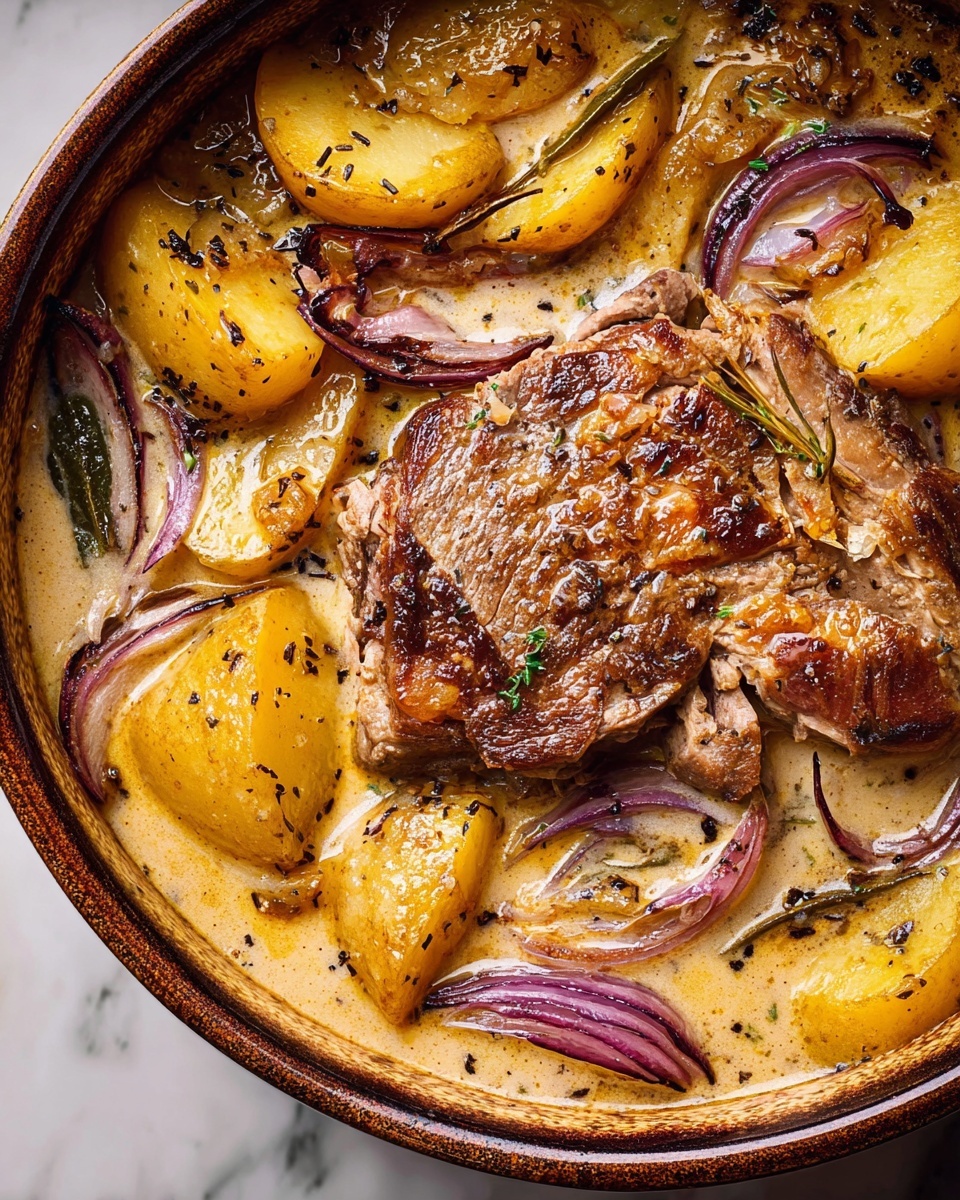
Apple Cider Braised Pork Shoulder Recipe

If you’re looking for a cozy, comforting dish with layers of flavor that’s perfect for fall or any time you want a hearty meal, this Apple Cider Braised Pork Shoulder Recipe is going to be your new go-to. I love how the apple cider adds a subtle sweetness and tartness that perfectly balances the richness of the pork shoulder—it’s like a warm hug on a plate. Whether you’re serving a family dinner or want a make-ahead dish with impressive flavor, this recipe fits the bill beautifully.
What makes this Apple Cider Braised Pork Shoulder Recipe especially worth trying is how easy it is to get tender, melt-in-your-mouth pork without a lot of fuss. The slow braising process lets the meat soak up all those delicious aromatics—rosemary, thyme, garlic, and apples—so every bite tastes like you’ve been simmering it low and slow all day. Trust me, once you try this, you’ll find countless reasons to pull it out again when you want something wholesome and satisfying.
Ingredients You’ll Need
Choosing the right ingredients really makes a difference here. Using fresh apple cider (not vinegar) brings a crisp sweetness that complements the pork, while herbs like rosemary and thyme add that fragrant, earthy note we all crave. I always recommend a firm, tart apple variety because they hold their shape during cooking and add the perfect touch of brightness.
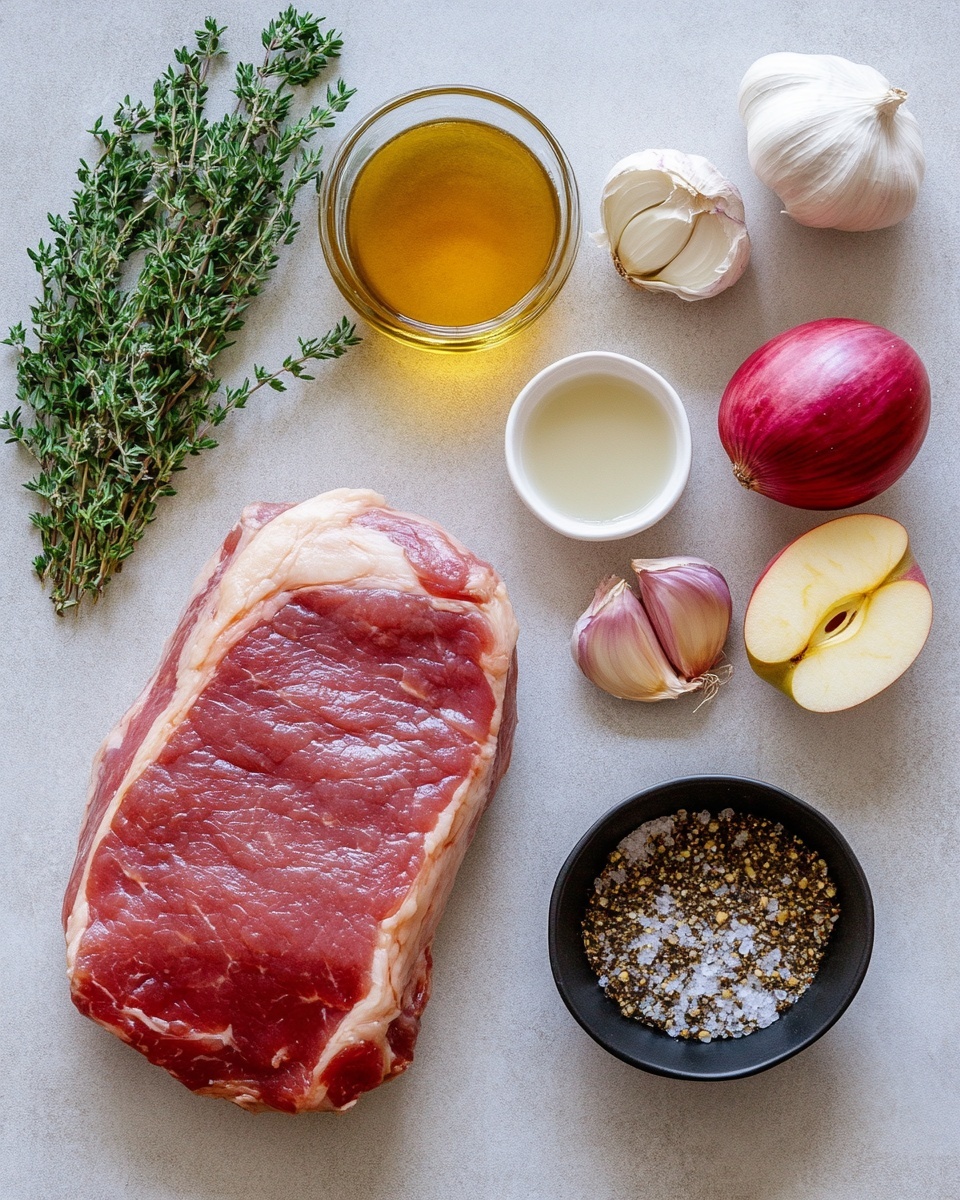
- Pork shoulder roast or Boston butt roast: A 4-5 lb cut works best for tender, juicy meat perfect for braising.
- Neutral oil: Something like vegetable or canola oil is ideal for searing without overpowering flavors.
- Fresh apple cider: Use fresh cider, not apple cider vinegar, for that lovely balance of sweet and tangy.
- Chicken stock or broth: Adds savory depth to the braising liquid.
- Dijon mustard: Boosts flavor complexity and gives a mild zing to the sauce.
- Dehydrated minced onion: A handy way to layer onion flavor without chopping.
- Garlic head (top sliced off): Roasting it whole softens the garlic and adds sweetness to the broth.
- Rosemary sprigs: Fresh is best, lending a piney, aromatic touch.
- Thyme sprigs: Together with rosemary, they create an herbaceous base.
- Red onion: Thick slices hold up well and caramelize beautifully in the braise.
- Firm and slightly tart apples: Think Honeycrisp or Pink Lady to add zest without turning mushy.
- Kosher salt and freshly cracked black pepper: Essential for seasoning!
Variations
I like to switch things up depending on the season or mood, and this Apple Cider Braised Pork Shoulder Recipe is wonderfully adaptable. Don’t be afraid to make it your own—there’s so much room for creativity here!
- Use bone-in pork shoulder: I find the bone adds extra flavor and moistness during braising, but boneless works well too if you prefer easier slicing.
- Swap fresh herbs for dried: If you don’t have rosemary or thyme on hand, 1 teaspoon dried each can stand in—just add them earlier in the cooking process.
- Add a splash of apple brandy or bourbon: For a boozy twist that deepens the flavor, add about a quarter cup when you add the braising liquid.
- Try different apples: If you can’t find Honeycrisp or Pink Lady, Gala apples are my second pick for a nice balance of sweet and tart without falling apart.
- Make it spicier: Toss in a pinch of red pepper flakes or a diced chili for a warm kick that plays nicely with the apple cider’s sweetness.
How to Make Apple Cider Braised Pork Shoulder Recipe
Step 1: Prep and Season the Pork
Start by trimming any large fat caps off your pork shoulder—this helps the seasoning penetrate better and prevents the final dish from feeling greasy. Then cut the roast into four large pieces unless it’s bone-in, which I usually leave whole. Pat the pork dry with paper towels—that’s key to getting a nice sear. Don’t be shy about seasoning liberally with kosher salt and freshly cracked pepper; this layer of flavor sets the foundation for the whole dish.
Step 2: Sear the Pork for Deep Flavor
Heat your neutral oil in a large Dutch oven over medium-high heat. When the oil is hot, arrange the pork pieces in a single layer—don’t crowd the pot or you’ll steam instead of sear. Sear each side for about 4-5 minutes until you get a beautiful deep brown crust. This step is crucial because those caramelized bits add so much complexity to the braising liquid later. If your pot is small, sear in batches—patience here pays off big time.
Step 3: Mix Braising Liquid and Add Herbs
While searing, whisk together fresh apple cider, chicken stock or broth, Dijon mustard, and dehydrated minced onion. This mix becomes your braising liquid, marrying sweet, savory, and tangy notes perfectly. Tie your fresh rosemary and thyme sprigs together with kitchen twine to make a convenient herb bundle for easy removal later. It’s a simple step that makes cleanup a breeze.
Step 4: Start Braising in the Oven
Once the pork is nicely browned, pour your braising liquid into the pot. Nestle your herb bundle and the sliced garlic head right in with the pork, then cover tightly with a lid. Transfer to a 325°F oven and let it braise low and slow—this is where magic happens. After about 2.5 to 3 hours (closer to 2.5 if your pork is boneless), check the meat for tenderness and flip the pieces for even cooking.
Step 5: Add Onions and Apples
When the pork is just shy of fork-tender, carefully take the pot out of the oven and arrange the thick red onion slices and apple wedges around the meat. Cover and return it to the oven for another 30 to 45 minutes. This step lets the apples and onions soften and soak up all those luscious braising juices, adding wonderful texture and flavor contrast to your dish.
Step 6: Rest and Serve
Once the pork is wonderfully tender, remove the pot from the oven and let everything rest in the liquid for about 30 minutes before serving. This resting time helps the meat reabsorb juices and makes it easier to slice or pull apart. Don’t forget to squeeze the softened garlic cloves out of their skins into the broth or directly onto the pork—they add a mellow, sweet garlic punch that’s simply irresistible. Ladle some of those delicious juices over the pork, apples, and onions when serving for the ultimate flavor experience.
How to Serve Apple Cider Braised Pork Shoulder Recipe
Garnishes
I love finishing this dish with a sprinkle of fresh thyme leaves or chopped parsley—it brightens up the rich flavors and adds a pop of color. A little drizzle of extra apple cider reduction or a spoonful of the braising liquid right on top makes each bite extra indulgent. For a touch of texture, toasted pecans or walnuts also make a delightful contrast.
Side Dishes
This recipe pairs beautifully with creamy mashed potatoes or buttery polenta to soak up the amazing braising liquid. Roasted root vegetables like carrots and parsnips or a simple green salad with vinaigrette add balance and freshness. When I made it last fall, my favorite combo was smashed potatoes and sautéed green beans with garlic—comfort food at its best.
Creative Ways to Present
For a festive dinner, I’ve served the braised pork on a wooden board surrounded by the caramelized apples and onions, garnished with fresh herbs and a bowl of the reduced pan juices on the side. It looks gorgeous and encourages everyone to dig in family-style. Also, shredded leftover pork works amazingly well in sliders or tacos for a completely different and fun presentation!
Make Ahead and Storage
Storing Leftovers
If you’ve got leftovers—and trust me, you will—store the pork along with some of the braising liquid in an airtight container in the fridge. This helps keep the meat moist and flavorful for up to 4 days. I’ve found that leaving the pork in the liquid prevents it from drying out and makes reheating so much better.
Freezing
Freezing this Apple Cider Braised Pork Shoulder Recipe is a lifesaver! Just portion out the pork and braising liquid into freezer-safe bags or containers. When sealed tightly, it holds up beautifully for 2 to 3 months. I usually freeze in single-meal portions, which makes it easy to defrost only what I need without waste.
Reheating
To reheat, gently warm the pork in a covered skillet over low heat with some of the reserved braising juices or broth to keep it juicy. Avoid microwaving if possible, as low and slow reheating retains the tender texture much better. A splash of extra apple cider added while warming can freshen up the flavors too.
FAQs
-
Can I use apple cider vinegar instead of fresh apple cider in this recipe?
No, I don’t recommend substituting apple cider vinegar for fresh apple cider here. The recipe relies on the natural sweetness and fruity flavor of fresh apple cider, while vinegar would add too much acidity and could overpower the dish. Stick with fresh apple cider for the best balance.
-
Do I need to tie the herbs together for the braise?
Tying rosemary and thyme into a bundle is optional but highly recommended. It makes it much easier to remove the herbs before serving, preventing unexpected herb bites and keeping the braising liquid smooth. Plus, it looks neat when you’re handling the pot.
-
Can I make this recipe in a slow cooker instead of the oven?
Yes! After searing the pork and preparing the braising liquid, you can add everything to a slow cooker. Cook on low for 6-8 hours or until the meat is fall-apart tender. Just add the apples and onions about an hour before the end to keep their texture intact.
-
Should I trim all the fat off the pork shoulder before cooking?
Not all of it—some fat is important for juiciness and flavor. But if you notice particularly thick fat caps, trimming some off helps prevent the dish from being too greasy. I usually trim the largest chunks but leave a good layer to melt into the meat during braising.
-
What if I don’t have a Dutch oven—can I use a regular pot?
A heavy, oven-safe pot with a tight-fitting lid is ideal. If you don’t have a Dutch oven, try a large stainless steel or cast iron pot that’s ovenproof. Just make sure it retains heat well and you have a lid to keep moisture in.
Final Thoughts
This Apple Cider Braised Pork Shoulder Recipe really holds a special place in my kitchen because it transforms simple ingredients into something extraordinary with minimal effort. It’s the kind of dish I turn to when I want comforting food that feels a little bit fancy but requires no last-minute fuss. I can’t wait for you to try it and enjoy those tender bites with apples and herbs—it just might become your new favorite way to cook pork!
Print
Apple Cider Braised Pork Shoulder Recipe
- Prep Time: 20 minutes
- Cook Time: 3 hours 45 minutes
- Total Time: 4 hours 5 minutes
- Yield: 6 servings 1x
- Category: Main Course
- Method: Braising
- Cuisine: American
Description
This Apple Cider Braised Pork Shoulder recipe features tender, flavorful pork slowly cooked in a savory apple cider and herb-infused braising liquid. The pork is seared to develop a rich crust, then braised with fresh apples, onions, garlic, rosemary, and thyme, resulting in a comforting dish perfect for a hearty family meal.
Ingredients
Pork and Seasoning
- 4–5 lb pork shoulder roast or Boston butt roast
- Kosher salt, to taste
- Freshly cracked black pepper, to taste
- 2 tablespoons neutral oil
Braising Liquid
- 2 cups fresh apple cider (not apple cider vinegar)
- 2 cups chicken stock or broth
- 2 tablespoons Dijon mustard
- 1 tablespoon dehydrated minced onion
Herbs and Aromatics
- 1 head of garlic, top sliced off opposite of the root end
- 3 rosemary sprigs
- 4 thyme sprigs
Additional Vegetables and Fruit
- 1 red onion, cut into thick slices
- 2 firm and slightly tart apples, peeled and cut into wedges (such as Honeycrisp, Pink Lady, or Gala)
Instructions
- Preheat Oven: Preheat your oven to 325°F to prepare for braising.
- Prepare the Pork: Trim any large excess fat from the pork shoulder if needed. Cut into four large pieces or leave whole if bone-in. Pat the pork dry and season all over generously with kosher salt and freshly cracked black pepper.
- Sear the Pork: Heat neutral oil in a large Dutch oven over medium-high heat. Once hot, arrange the pork pieces in a single layer and sear each side for 4 to 5 minutes until deeply browned, repeating until all sides are seared. You may need to work in batches depending on the size of your Dutch oven.
- Prepare Braising Liquid and Herbs: While searing, whisk together fresh apple cider, chicken stock or broth, Dijon mustard, and dehydrated minced onion. Tie rosemary and thyme sprigs together with kitchen twine to form a herb bundle.
- Braise the Pork: After searing, pour the braising liquid into the Dutch oven with the pork pieces. Add the herb bundle and the whole garlic head to the pot. Cover with a lid and transfer the pot to the oven. Braise for about 3 hours, starting to check tenderness at 2.5 hours if using boneless pork. Flip the pork halfway through the cooking time.
- Add Apples and Onions: When the pork is almost fork-tender, remove the pot from the oven. Arrange the sliced red onions and apple wedges around the pork. Cover and return to the oven for an additional 30 to 45 minutes until the pork is very tender.
- Rest and Serve: Remove the pork from the oven and let it rest in the braising liquid for 30 minutes. Squeeze the softened garlic cloves out of their husk into the broth or onto the pork. Season the braising juices with salt and pepper to taste. Serve the juicy braised pork topped with apples, onions, and spoon the flavorful cooking juices over everything.
Notes
- Choose boneless or bone-in pork shoulder based on preference and refer to further notes on this in the blog post.
- If your pork has excess fat, trim it before searing for better texture and flavor balance.
- Select firm, slightly tart apple varieties like Honeycrisp, Pink Lady, or Gala for best results; avoid Granny Smith or Red Delicious as they tend to disintegrate during cooking.
Keywords: braised pork shoulder, apple cider pork, pork roast recipe, fall dinner, slow cooked pork, Dutch oven pork, apple pork recipe